
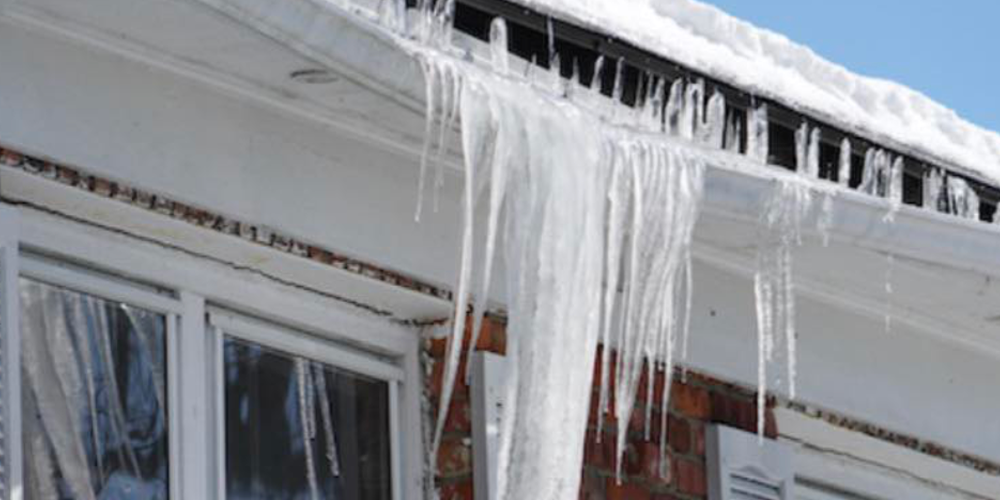
The January “Snowmageddon” of 2026 will be remembered by Central Ohioans for years to come. While we’ve all finished shoveling our driveways in Dublin, Westerville, and New Albany, a hidden crisis is currently unfolding just above our heads.
As the record-breaking ice and snow finally melt away, they are revealing the structural toll they took on our homes. At Ohio Gutter Cleaning LLC, we’ve seen a massive influx of calls from homeowners in the 43081 and 43054 areas noticing “new” drips and sagging metal. The truth is, ice is an incredibly destructive force. A single foot of ice in a gutter can weigh over 30 pounds. When you multiply that by the 100+ feet of guttering on a standard Powell or Pickerington home, you are looking at thousands of pounds of stress on your fascia boards.
Before the heavy “April Showers” arrive, use this comprehensive guide to conduct a post-winter inspection and protect your home’s foundation.

1. The “Gutter Smile”: Identifying Sagging Mid-points
If you stand at the curb of your property and look up, your gutters should follow a crisp, straight line with a very slight, almost imperceptible tilt toward the downspouts. If the middle of a long run looks like it’s “bowing” or “smiling,” you have a problem.
During the January freeze, many gutters became “ice-locked.” When the water couldn’t drain, it froze solid, creating a heavy internal block. Aluminum is a flexible metal; under that immense weight, the gutter hangers can bend or even partially slip out of the wood. A sagging gutter is more than an eyesore—it creates a “dead zone” where water pools, stagnates, and eventually overflows, regardless of how clean the gutters are.

2. The Gap: Fascia Pull-Away and Structural Rot
One of the most dangerous results of the recent ice dams is the “gap.” Walk the perimeter of your home and look at the connection point where the gutter meets the roofline. Can you see daylight between the back of the gutter and the wood?
Ice dams expand in all directions. As they grow, they often act like a hydraulic wedge, physically prying the gutter away from the fascia board. In older, historic areas like Old Worthington or Uptown Westerville, this can be catastrophic. Once that gap exists, rain will no longer flow into the gutter; it will flow behind it. This leads to rotted wood, mold in your attic, and water dripping directly onto your foundation.

3. Exploded Downspouts: The “Soda Can” Effect
We’ve all seen what happens when you leave a soda can in the freezer. The same physics applies to your downspouts. If your gutters were even partially clogged with fall leaves from those beautiful New Albany oaks, the water backed up and froze inside the vertical pipes.
Because the ice had nowhere to go, it likely split the seams of your downspouts. Check the back of your pipes (the side facing the house). If you see jagged tears in the aluminum or if the pipe looks “bulged,” the structural integrity is gone. A split downspout will leak water all along your siding, leading to unsightly staining and potential interior wall leaks.
4. Failed Seams and the “Corner Waterfall”
Most homes in Central Ohio utilize “seamless” gutters, but that’s a bit of a misnomer. While the long runs are one piece, every corner (miter) is a seam sealed with high-grade industrial caulk.
Extreme temperature swings—like going from -10°F to 45°F in a matter of days—cause aluminum to expand and contract rapidly. This often “pops” the seals at your corners. If you see white “icicle” marks (calcium deposits) on the bottom of your corner miters, it’s a sign that the seal has failed. Come the next heavy rain, that corner will become a waterfall, eroding your expensive landscaping and hostas.
5. The Ground Game: Disconnected Extensions and Clay Soil
In cities like Plain City and Sunbury, the soil is notoriously heavy with clay. This soil acts like a sponge, holding water against your foundation and causing it to crack or “heave” during freeze-thaw cycles.
Your gutters’ only job is to move water away from this soil. During the January snow removal, it is common for shovels, snowblowers, or sliding roof ice to knock downspout extensions loose. If your downspout is currently dumping water within 3 feet of your foundation, your basement is at risk. Ensure all extensions are securely reattached and directing water at least 5 to 10 feet away from the home. If you believe your home has foundation / basement damage, we recommend reaching out to Ohio Basement Authority ASAP.

6. Shingle Grit: The “Silent Clog”
The heavy winds of the recent storms did more than just blow snow; they stripped the protective granules (grit) off your shingles. If you look into your gutters right now, you’ll likely see a layer of grey, sandy silt.
This grit is surprisingly heavy and acts like “sandbags” inside your gutter system. It slows down the flow of water and provides a perfect “anchor” for spring seeds (like the maple helicopters common in Gahanna) to take root and grow. A “clean” gutter with two inches of shingle grit is a gutter that is destined to fail during the first thunderstorm of spring.
Conclusion: Prevention is Cheaper than Repair
The January Snowmageddon was an “act of God,” but the water damage that follows it is preventable. Taking the time now to identify these six issues can save you thousands of dollars in foundation repair and basement waterproofing later this year.
At Ohio Gutter Cleaning LLC, we specialize in post-winter recovery. Whether you’re in Lewis Center, Pickerington, or Hilliard, we understand the specific challenges Ohio weather poses to your home.
Get a “No-Visit” Inspection Today
Don’t risk your safety on a ladder checking for winter damage. Contact us today and we can make sure your gutters are ready for the Spring and Summer seasons ahead!