After the Snowmageddon: Protecting Your Home from Record Winter Snow and Ice

For many homeowners in Central Ohio, the winter of 2026 has already carved its name into the record books. On January 24th and 25th, we didn’t just get a snowstorm; we experienced a historic “Snowmageddon” that blanketed Columbus and surrounding areas like Dublin, Westerville, and New Albany with 10 to 15 inches of snow in a single weekend. This is the most significant snowfall we’ve seen in Central Ohio since 2008.
Since that record-breaking dump, Ohio has been locked in a brutal deep freeze. Temperatures have plummeted, often hovering near 0°F, with wind chills making it feel much worse. In a typical Ohio winter, we usually see a “thaw cycle” within a few days of a storm, where temperatures rise above 32°F and allow the snow to drain away. This year is different. Because the mercury has stayed stubbornly below freezing, that massive accumulation of snow hasn’t gone anywhere—it has simply compressed, hardened, and turned into a heavy, icy burden sitting directly on your roof.
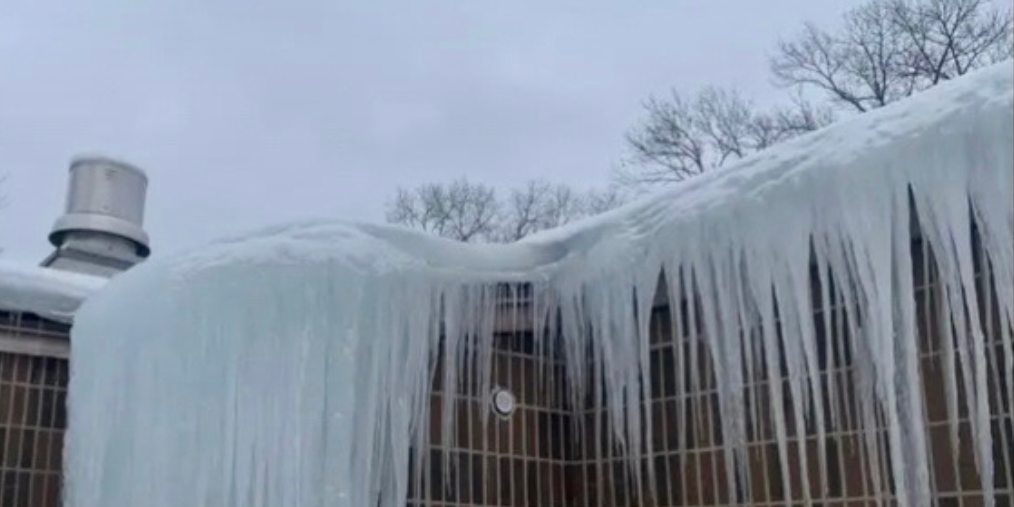
This prolonged freeze is the perfect recipe for a homeowner’s worst nightmare: the ice dam. An ice dam is a thick ridge of solid ice that forms along the eaves of your roof. While they might look like nothing more than oversized icicles, they are actually a warning sign of a structural failure. When an ice dam forms, it creates a literal wall that prevents melting snow from reaching your gutters. Instead of draining away safely, that water is forced backward, creeping under your shingles and into your attic, walls, and insulation.
As we navigate the aftermath of the biggest snowfall in nearly two decades, understanding how to manage this ice is no longer just “good maintenance”—it’s essential for protecting your home from thousands of dollars in water damage. In this guide, we’ll break down why this specific 2026 weather pattern is so dangerous for Ohio roofs and what you can do to keep your foundation and ceilings dry while the “Snowmageddon” ice persists.
The Science of Ice Dams: How Attic Heat Turns Snow into Damage
The science is simple: when heat escapes into your attic, it creates a temperature imbalance that leads to the formation of dangerous ice dams at your roof’s edge.

The Temperature Tug-of-War
In a perfect world, your roof would be the same temperature as the outside air. However, in most Ohio homes—especially older builds in neighborhoods like Clintonville or Upper Arlington—heat escapes from the living space into the attic. This happens through “bypass” points like recessed lighting, attic hatches, or simply insufficient insulation.
This escaped heat rises to the highest point of your attic and warms the underside of the roof deck. Even when it is a staggering 0°F outside, the surface of your roof under that thick blanket of snow can rise above 32°F.
The Melt-and-Migrate Cycle
Because snow is a surprisingly good insulator (much like a cooler keeps ice from melting), it traps that escaped house heat against the shingles. The snow at the very bottom of the stack—the layer touching your roof—begins to melt. This liquid water then trickles down the slope of the roof, hidden beneath the top layer of white snow.
The trouble starts when that water reaches the eaves (the part of the roof that overhangs your exterior walls). Because the eaves aren’t sitting over a heated room, they remain at the true outdoor temperature—currently near zero. As soon as that trickling meltwater hits the frozen eave, it flashes back into solid ice.
Building the Barrier
Every hour that your attic stays warm and the outside air stays cold, this cycle repeats.
-
The Ridge grows: A tiny lip of ice becomes a 2-inch curb, then a 6-inch wall.
-
The Reservoir forms: Once that wall of ice (the “dam”) is high enough, the liquid water behind it has nowhere to go. It pools into a hidden rooftop pond.
-
The Shingle Failure: Your roof is designed to shed water like an umbrella, with shingles overlapping to let gravity do the work. It is not designed to be a swimming pool. That trapped water eventually finds a way under the shingles, soaking your roof deck and beginning its slow drip into your insulation and ceiling drywall.

The Role of the “Snowmageddon” Weight
What makes the 2026 Snowmageddon particularly dangerous is the sheer volume of snow. With 12+ inches of snow acting as a heavy “blanket,” the heat from your home is trapped more effectively than ever before, accelerating the melting process. Furthermore, the weight of the resulting ice dam can reach hundreds of pounds, putting immense structural pressure on your gutters and fascia boards.
Why Clogged Gutters are the Foundation of Winter Ice Disasters
When your gutters are filled with the remnants of an Ohio autumn—specifically those heavy oak leaves, pine needles, and the infamous “helicopter” maple seeds—they create a physical infrastructure that traps water. Here is why those clogs are turning the 2026 Snowmageddon into a homeowner’s nightmare:
1. The “Instant Dam” Effect
In a clean gutter system, the first bits of snowmelt have a clear path to the downspout. They exit the roofline before they even have a chance to freeze solid. But if your gutters were 50% full of debris when that record-breaking 12 inches of snow hit, that debris acted like a sponge. It soaked up the initial meltwater, became a heavy slush, and then flash-froze into a solid block of “ice-crete.” This creates an “instant dam” right at the edge of your roof, long before a natural ice ridge would have formed on its own.
2. Frozen Downspouts and the “Back-Up” Loop
Think of your downspouts as the exhaust pipe for your roof. If the “elbows” of your downspouts are packed with debris, they freeze into solid columns of ice. Once the downspout is frozen, the entire gutter trough becomes a standing pool of water. In the sub-zero temperatures we’ve seen recently across Central Ohio, that water has nowhere to go but up. It fills the gutter, overflows the back (right against your home’s fascia board), and begins to climb up the shingles.
3. The Weight Problem: Dangers to Your Fascia
Ice is incredibly heavy—much heavier than the snow it came from. A single foot of ice in a gutter can weigh roughly 20 to 30 pounds. When a gutter is already weighed down by wet leaves and then becomes packed with solid ice from the 2026 storms, it can easily reach a total weight of hundreds of pounds.
-
The Result: We often see gutters in Columbus and Dublin sagging or literally pulling away from the house. This doesn’t just ruin the gutter; it rips the “fascia” (the wooden board the gutter is attached to), exposing your home’s internal rafters to rot and moisture.
4. “Good” vs. “Bad” Icicles
Not all icicles are the same, and your gutters tell the story:
-
Good Icicles: Small icicles hanging from the front edge of a gutter usually mean the water is at least making it into the gutter before freezing.
-
Bad Icicles: Icicles forming behind the gutter or coming out of the “soffit” (the underside of your roof overhang) are a red flag. This means the gutter is so clogged and frozen that water is backing up into your home’s structure.
Why 2026 is Different
Usually, Ohio gets a “break”—a 40-degree day that lets some of this debris-filled ice melt and clear out. But because we have remained near 0°F since the Snowmageddon, those clogs have become permanent fixtures for the winter. If you didn’t get a professional clean in late 2025, your gutters are likely currently holding a “frozen core” of debris that is actively feeding the ice dams on your roof.
Emergency Ice Dam Relief: Safe Solutions for Central Ohio Homeowners
If you see water staining your ceiling or hear the slow drip-drip-drip behind your drywall, you need to act. However, more damage is often done to Ohio roofs by panicked homeowners than by the ice itself.
Here is how to manage the current crisis safely without destroying your shingles or your landscaping.
The “Pantyhose Trick”: Using Calcium Chloride Socks
If a dam has already formed and water is pooling behind it, you need to create a “path of least resistance.” The goal isn’t to melt the whole ice dam (which can weigh thousands of pounds), but to carve a vertical channel through it so the trapped water can escape.
-
The Tool: Take an old pair of pantyhose or a long tube sock and fill it with Calcium Chloride (NOT rock salt—more on that below).
-
The Placement: Carefully lay the filled sock vertically across the ice dam. It should bridge the dam, with one end touching the roof above the ice and the other end hanging slightly over the gutter.
-
The Science: Calcium chloride is exothermic; it creates its own heat as it reacts with moisture. This will slowly “burn” a tunnel through the ice, allowing the trapped liquid water to flow safely into the gutter and down the downspout.

The Roof Rake: Removing the “Fuel”
The snow sitting on your roof is the “fuel” for the ice dam. If you can safely reach your eaves from the ground, use a telescoping roof rake to pull down the first 3 to 4 feet of snow.
-
Safety First: Never stand directly under the eaves while raking; 2026’s heavy snowpack can release in a “roof avalanche” that can bury a person in seconds.
-
Avoid the Shingles: Don’t scrape the rake all the way down to the shingle surface. Leave an inch of snow to avoid pulling off the protective granules that keep your roof waterproof.
What NOT To Do: The “Hammer and Chisel” Trap
It is incredibly tempting to grab a ladder and a hammer to knock those giant icicles off. Do not do this. * Brittle Shingles: In 0-degree weather, your asphalt shingles are as brittle as glass. One missed swing with a hammer won’t just break the ice; it will shatter the shingle underneath, creating a permanent leak point.
-
Structural Shock: The vibration of hammering on a frozen gutter can cause the gutter spikes to pull out of the frozen wood, leading to the entire system collapsing.
Why You Must Avoid Rock Salt (Sodium Chloride)
While rock salt is great for your Columbus driveway, it is poison for your roof and yard.
-
Corrosion: Rock salt is highly corrosive to the aluminum in your gutters and the nails holding your shingles in place.
-
The “Meatloaf” Effect: When that salty meltwater eventually drains, it pours directly onto your dormant bushes and flower beds. This “saltwater bath” can kill expensive landscaping, leaving you with brown, dead plants come April. Always insist on Calcium Chloride, which is much gentler on your Ohio greenery.
How to Prevent Ice Dams Permanently: Insulation, Ventilation, and Cleaning
To ensure you never have to climb a ladder with a salt-filled sock again, you must address the three pillars of ice dam prevention: Insulation, Ventilation, and Maintenance.
1. Sealing the “Attic Bypasses”
Most people think adding more insulation is the first step. However, piling insulation on top of a “leaky” ceiling is like putting a heavy coat on over a wet t-shirt. You have to stop the airflow first.
-
What are Bypasses? These are hidden gaps around chimneys, recessed “can” lights, plumbing stacks, and attic hatches. Warm air from your kitchen or living room “bypasses” your insulation through these cracks and heads straight for your roof deck.
-
The Fix: Before next winter, use expanding spray foam or fire-rated caulk to seal every wire and pipe penetration in your attic floor. This keeps the heat in your home and out of the “melting zone.”
- Beyond preventing ice, sealing attic air leaks is a great way to lower your monthly bills, as noted in these winter energy saving tips from Columbia Gas of Ohio.
2. Balanced Ventilation: The “Cold Roof” Philosophy
The goal of a healthy Ohio attic is to stay as cold as the outside air. If your attic is 0°F, the snow won’t melt, and the ice dam can’t start.
-
The Intake: Check your soffit vents (the vents under your eaves). Are they painted shut or covered by insulation? These vents pull in cold air.
-
The Exhaust: Ensure your ridge vent (at the peak of the roof) is clear. This allows any residual warm air to escape before it can warm the shingles.
-
The Result: A continuous flow of cold air under the roof deck creates a thermal barrier that keeps the snow in a frozen, stable state.
3. Professional Gutter Maintenance (The Final Line of Defense)
Even with perfect insulation, Ohio’s weather is unpredictable. Solar radiation (sunlight hitting the snow) can still cause minor melting even on a cold roof. This is where Ohio Gutter Cleaning LLC comes in.
-
The “Clear Path” Guarantee: A professional cleaning in late fall removes the grit and organic “sponge” that traps water. When the sun hits your roof in February, that tiny bit of meltwater needs a clear, debris-free highway to the downspout. If the gutter is clear, the water leaves. If the gutter is clogged, it stays—and the dam begins.
-
The Gutter Guard Advantage: For homes in heavily wooded areas like Worthington or Gahanna, we recommend high-quality micro-mesh gutter guards. These allow water in but keep out the tiny pine needles and maple seeds that create “frozen dams” inside the trough.
-
A Note on Heat Cables: For homes with chronic “problem valleys” where ice always forms regardless of insulation, we can discuss the installation of self-regulating heat cables. Unlike old-fashioned “heat tape,” these modern systems only turn on when it’s freezing, keeping a drainage channel open through the heaviest snow.
Winter Safety: Why DIY Ice Removal Isn’t Worth the Risk
With the historic snowfall of 2026, many Ohio homeowners feel an urgent need to get on their roofs. However, the statistics for winter ladder falls are sobering. In a typical year, over 500,000 people are treated for ladder-related injuries in the U.S., but when you add the specific conditions of a Central Ohio “Deep Freeze,” those risks skyrocket.
The Triple Threat of Ohio Winter DIY
-
Invisible “Black Ice” on Ladders: Even if your driveway looks salted, the rungs of an aluminum ladder can develop a microscopic layer of “flash ice” that makes your footing treacherous.
-
Unstable Ground: As the 12+ inches of Snowmageddon snow begins to compress, it creates uneven, slushy footing. A ladder that seems stable when you climb up can shift or “sink” as the heat from your boots softens the snow at the base.
-
The “Roof Avalanche”: When you are on a ladder raking an ice dam, you are vibrating the roof. With the record snowpack we have right now, it is common for the entire “sheet” of snow above you to slide off at once. This can knock a ladder out from under a homeowner in a split second.
At Ohio Gutter Cleaning LLC, we use professional-grade ladder stabilizers and fall-arrest systems designed for these exact conditions. Following OSHA ladder safety guidelines ensures our team remains safe while protecting your home. We handle the heights so you can stay safe and warm inside.
Whether you are in Dublin, New Albany, Westerville, or right here in Columbus, your home is your biggest investment. Don’t let a record-breaking winter take a bite out of its value.
Take Action Today
Is your home currently showing signs of ice dams? Or are you worried about what the spring thaw will do to your clogged gutters?
Contact Ohio Gutter Cleaning LLC today for a professional winter inspection. We specialize in keeping Central Ohio homes dry, safe, and ready for whatever the 2026 weather throws at us next.